
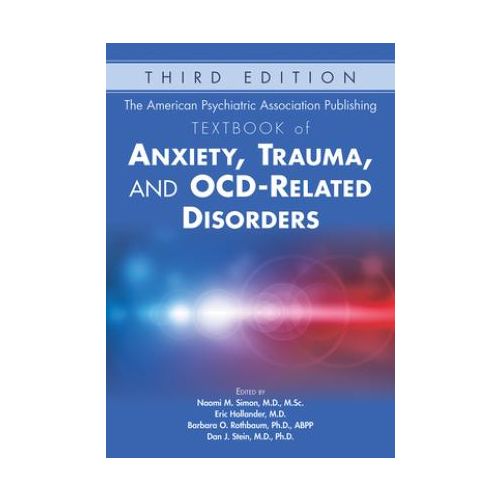
The American Psychiatric Association Publishing Textbook of Anxiety, Trauma
721.5 RON
Designed for clinicians at every level The American Psychiatric Association Publishing Textbook of Anxiety Trauma and OCD-Related Disorders addresses the origin assessment diagnosis and treatment of these disorders in a comprehensive up-to-date and compelling manner. Fresh voices are everywhere in this authoritative revision of the classic text as more than 60 of the contributors are new. They join stalwarts from the previous edition experts who bring stellar credentials and a discerning eye to the task of revising the text to reflect cutting-edge scholarship and evidence-based clinical knowledge. Following a comprehensive overview of core principles the book provides detailed coverage of specific DSM-5 diagnoses generalized anxiety disorder obsessive-compulsive and related disorders panic disorder and agoraphobia social anxiety disorder specific phobia and trauma- and stressor-related disorders. Each section presents the latest thinking on phenomenology and pathogenesis then provides evidence-based clinical recommendations for pharmacotherapy and psychotherapy. New and noteworthy material includes the following Two new chapters focus on the features phenomenology and course of acute and integrated grief as well as the epidemiology clinical features evaluation and pathophysiology of complicated grief CG which affects a significant minority. Proper treatment of CG is critical because once it persists beyond 6 months impairment may last for years if not a lifetime. Accordingly a separate chapter is devoted to treatment options including a hybrid of cognitive-behavioral interpersonal motivational interviewing and psychodynamic methods. The Unified Protocol UP for Transdiagnostic Treatment of Emotional Disorders is examined in a fascinating new chapter. The UP is a promising treatment with empirical support for reduction of both symptoms and higher-order temperamental changes such as changes in neuroticism an underlying mechanism associated with onset and maintenance of emotional disorders. The chapter on anxiety disorders in late life is completely new and emphasizes the prevalence of anxiety in this population and its likelihood of remaining undetected and untreated. The epidemiology diagnosis and treatment of these disorders are examined in detail so that the reader will recognize the clinical features be able to differentiate them from depression and can identify appropriate treatment whether pharmacological or psychotherapeutic. Each chapter features a concise list of key clinical points to help the reader focus on the most important material for study as well as a list of recommended reading for those who wish to learn more.
Callisto
Lipsa Stoc